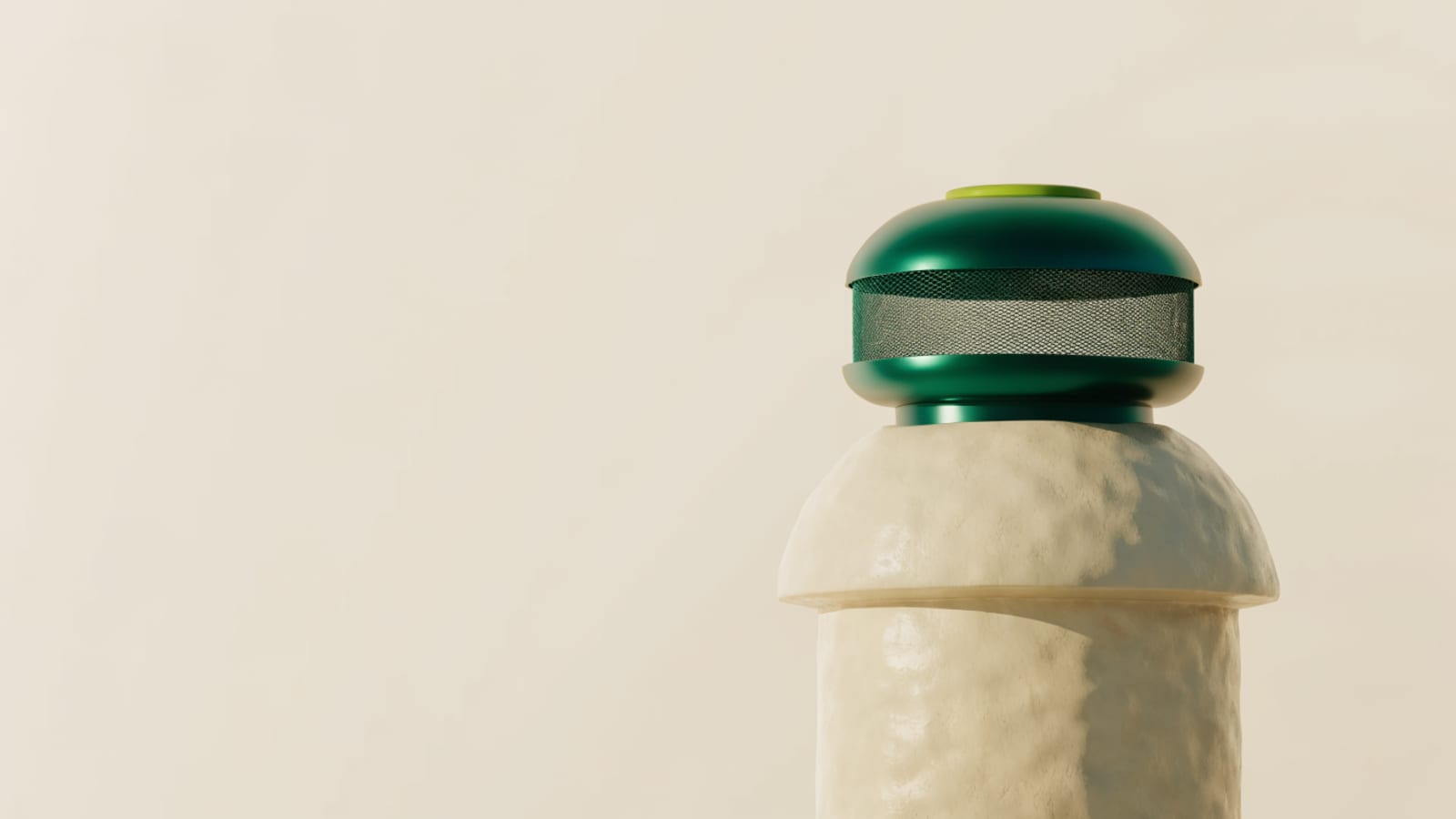
For a part that costs less than almost anything else on the roof, the chimney cap has an enormous job description: keep rain and snowmelt out of the flue, keep embers off the roof, keep birds and squirrels from moving into the warmest tube in the neighborhood, and hold its grip through wind that comes off the mountains with a running start. A missing or failing cap is the cheapest problem on your chimney and the source of some of the most expensive ones.
What an open or failed flue costs you
- Every storm drops water straight down the flue, where it soaks the smoke shelf, rusts the damper and feeds mold
- Freeze-thaw gets a water supply delivered directly inside the chimney core
- Raccoons, squirrels and birds treat the flue as a furnished apartment
- Leaves and twigs stack into a blockage that can push smoke, and carbon monoxide, back into the house
- Downdrafts shove cold outside air and old soot smell into the living room
How we do caps
The big-box universal cap fails here for two predictable reasons: it does not quite fit the flue, and it is not anchored for our wind. Ours are:
- Measured to your exact flue dimensions, single or multi-flue
- Stainless steel or copper, materials that shrug off weather instead of rusting into streaks
- Fitted with spark arrestor mesh that stops embers going out and wildlife coming in
- Mechanically anchored and sealed, so February gusts stay boring
We also handle chase covers, the sheet-metal lids on framed chimneys, which quietly rust through and become hidden leak sources on plenty of Thornton houses.
Repair or replace
A loose cap gets re-anchored. A bent screen gets straightened or swapped. But a rusted-through or undersized cap is not worth heroics; replacement costs little and ends the problem. We show you, in photos, where yours lands on that line, and if the honest answer is that a hardware store cap would serve your flue fine, we say that too.
FAQ about chimney caps
What is the difference between a cap and a crown?
The crown is the concrete slab finishing off the masonry; the cap is the metal roof standing guard over the flue opening. The crown sheds water off the structure, the cap keeps it out of the pipe. Houses need both doing their jobs.
Will a cap hurt my draft?
A correctly sized cap will not; a wrong one absolutely can. Sizing is most of the job, which is why we measure instead of eyeballing.
My cap blew off. Urgent or not?
Call it urgent-adjacent. One open week in dry weather is survivable; an open flue through a wet spring is how dampers rust and smoke shelves grow moss. It is a quick, cheap fix, so get it back on the calendar fast.