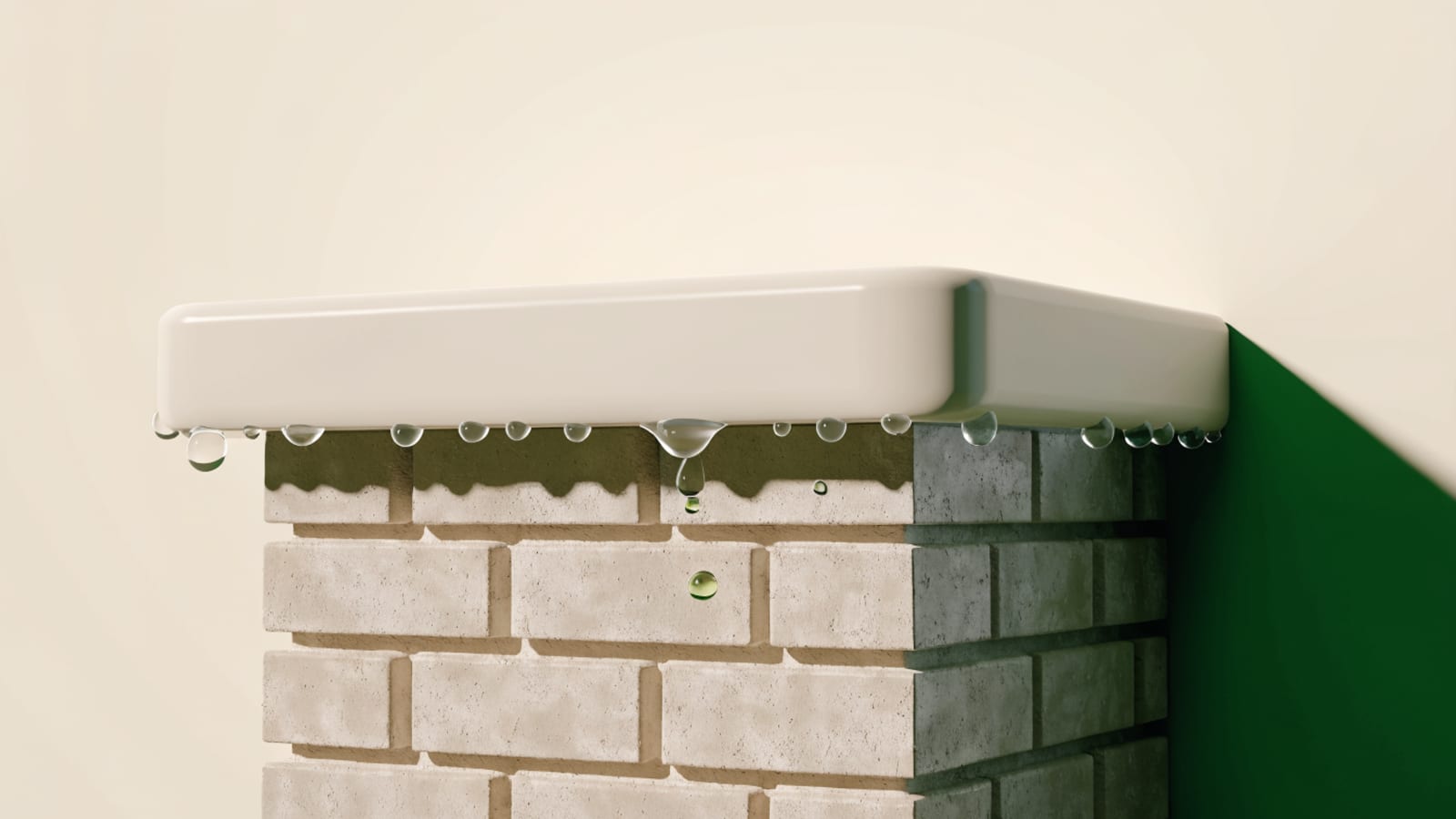
Stand across the street and look at the very top of your chimney. That sloped concrete slab crowning the brick is the roof of your chimney, and everything below it depends on how well it sheds water. In a climate that freezes and thaws as relentlessly as Thornton does, the crown takes more punishment per square inch than any other masonry on the property.
How crowns die in Colorado
Concrete cracks. Sun bakes it, ice wedges it, and cheap original construction hurries the process; plenty of local chimneys got a thin mortar wash instead of a proper cast crown on the day they were built. Once a hairline opens, the sequence is dependable: water enters, freezes, widens the crack, and repeats. The crown stops shedding water and starts drinking it, feeding moisture into the brick and flue below. What follows is spalling faces, rusted dampers, interior stains and repair bills that grow every season the crown stays broken.
What we do about it
- Assess honestly. Hairline crazing is a seal job. Structural cracks and delamination call for rebuilding. The photos decide, not the pitch.
- Seal sound crowns with a flexible waterproof coating that moves with temperature swings instead of cracking alongside the concrete.
- Rebuild failed crowns with proper crown mix, sloped to shed, with an overhang and drip edge so runoff clears the brick instead of washing down it.
- Check the neighbors. Cap, flashing and top courses get eyeballed while we are up there, because crown damage rarely travels alone.
Why the drip edge matters
A surprising share of crown-related damage is really drip-edge damage. When a crown ends flush with the brick, every rainfall sheets straight down the chimney face, saturating the top courses over and over. A correct overhang throws that water clear. It is a small detail that adds years to the whole stack, and it is standard on every crown we cast.
FAQ about chimney crowns
Can I tell from the ground whether the crown is cracked?
From the ground, you mostly do not; crowns fail out of sight. Clues that reach ground level include water stains near the fireplace, brick faces flaking off up high, and white mineral streaks below the top. The certain answer takes ladder work, and our look is free.
Is a small crown crack really a problem?
In a dry climate, maybe not for a while. In freeze-thaw country, a small crack is simply an early crack. Sealed now, it is a minor bill. Ignored for winters, it is brick replacement.
Crown, cap, or both?
They protect different things: the crown guards the masonry, the cap guards the flue opening. If one has failed, we check the other on the same trip, and most water problems end when both are right.