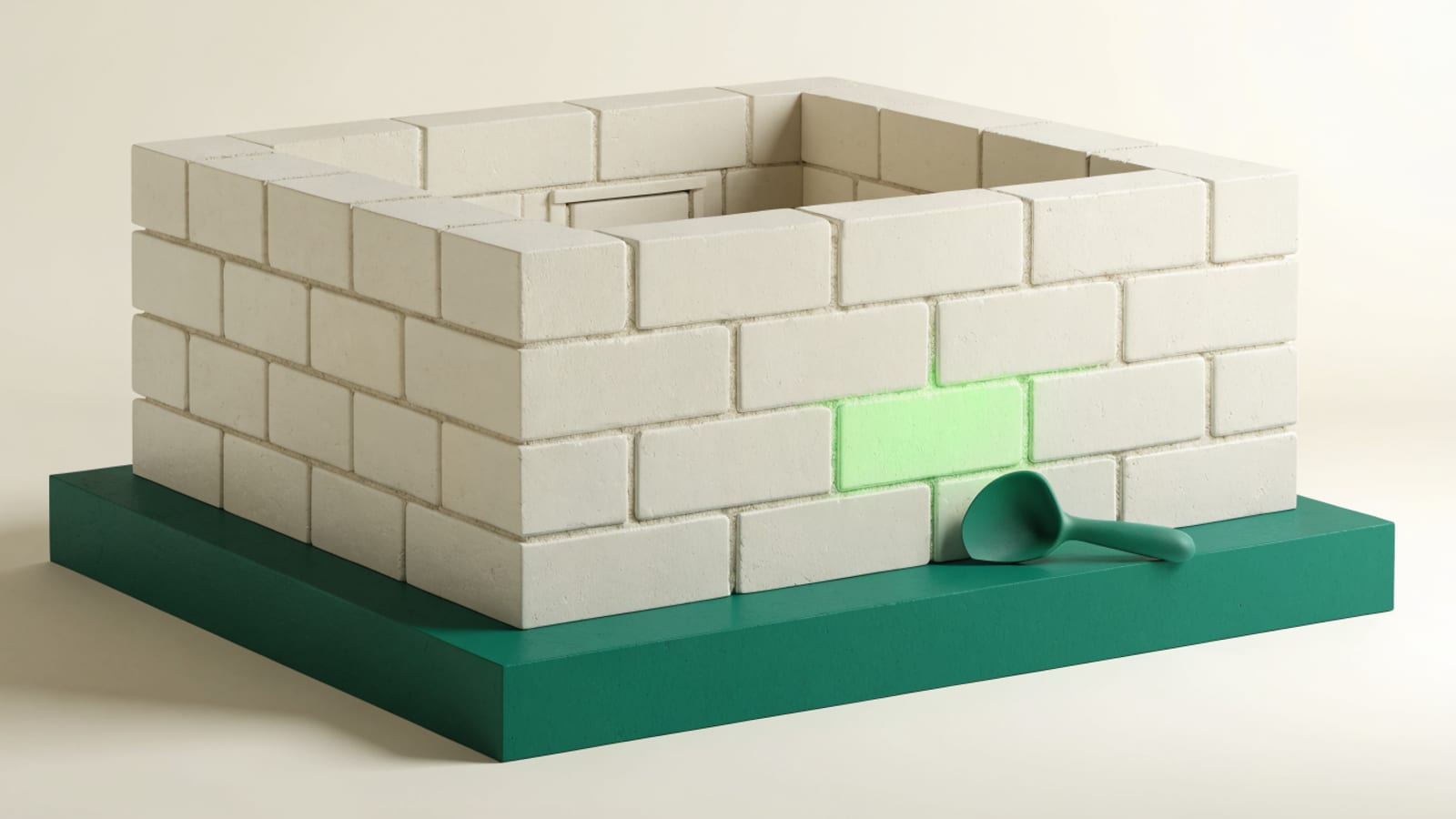
Of all the masonry in your house, none works a harsher shift than the firebox. It is the chamber that holds the actual fire, cycling from room temperature to flame-hot and back, evening after evening, winter after winter. The materials are special for exactly that reason: dense firebrick and refractory mortar engineered to take thermal punishment that would destroy ordinary masonry in a season.
Engineered for it, but not immune to it. Firebrick cracks, joints powder out, and gaps open in the one wall that is supposed to stand between a live fire and your home's framing. That is when we get the call.
What failure looks like in a firebox
- Firebrick with cracks wide enough to catch a fingernail, or faces flaking off in layers
- Joints turned to powder, leaving open seams between bricks
- Bricks loose enough to shift when pressed
- Gaps that glow when a fire is burning, which is the firebox telling you heat is reaching places it should never reach
- Scorch marks or heat discoloration on the surround outside the box
That glowing-gap symptom deserves its own sentence: stop burning and get it looked at, because glow means the protective envelope is open.
How we repair fireboxes
The materials are the whole game. Regular brick and bagged mortar have no business inside a firebox; they crack and shed under thermal cycling and make the problem worse while looking briefly better.
- Cracked and spalled firebrick cut out and replaced with rated firebrick
- Every joint raked and repacked with true refractory mortar built for flame contact
- Heat damage traced to its edges, so hidden trouble behind the box gets found now rather than later
- Full rebuilds of the box when age has taken the whole assembly, brought back to what the code book asks
Why fireboxes fail early around here
Colorado burning habits are streaky: cold snaps bring nightly fires, warm spells bring none, and every restart is another expansion cycle for the masonry. Add any moisture finding its way down a compromised flue and the firebrick takes hits from both directions. None of that is avoidable; catching it early is.
FAQ about firebox repair
Can I keep using a fireplace with cracked firebrick?
Hairline surface crazing is common and usually fine. Open cracks, missing mortar or loose brick mean stop until it is repaired. The line between the two is exactly what the free camera look establishes.
How long does a firebox repair take?
Joint repacking and a handful of brick swaps are typically a day. A full rebuild runs longer, and either way the new refractory needs a curing window before the first fire, which we spell out before we start.
Why did my firebox fail before the rest of the chimney?
Because it does the hardest work. The firebox takes direct flame while the rest of the stack only handles hot gases, so it is usually the first masonry to show age. Catching it early keeps the repair small.